
Let’s begin with an awkward situation:
Traffic is not an issue for the majority of local businesses.
They’re having trouble with their strategy.
They:
- Depend on referrals.
- Run random advertisements.
- Post on Instagram once.
- “Competition” is to blame.
- After 30 days, stop SEO.
The company across town is silently stacking in the meantime:
- Google’s rankings
- Evaluations
- Backlinks
- Local government
as well as creating currency.
If I were given 90 days and a half-decent local business, such as a plumber, roofer, lawyer, dentist, HVAC, med spa, or contractor…
This is precisely what I would do.
No tricks.
No dubious tricks.
Simple execution.
First, Let’s Define Reality
A monthly salary of $100,000 is not a pipe dream.
However, it is dependent upon:
- Your average job value
- Your profit margins
- The rate at which you close
- The size of your market
- Your rate of execution
If your typical salary is $5,000…
You require 20 jobs per month.
That’s five jobs a week.
That is one job per day.
That is feasible.
If your typical salary is $1,000?
You need volume now.
This implies that traffic and conversion optimization are even more important.
Leverage is SEO.
But only if it’s built properly.
Step 1: Build a “Money Page” That Prints Revenue

Digital brochures make up the majority of local websites.
A brochure is not necessary.
A revenue machine is necessary.
Rather than: “Services”
I would create highly targeted landing pages with the following goal in mind: “[Service] in [City].”
- “Emergency [Service] in my area”
- “Affordable [Service] in [City]”
- “Service in [City] on the same day”
For instance: Rather than:
Services for Plumbing
Create:
Austin Emergency Drain Cleaning with 24/7 Response
Here’s what distinguishes pros from amateurs:
The following should be on your money page:
- H1 optimized for keywords
- H2s secondary keyword variations
- Naturally, local neighborhoods were mentioned.
- Actual testimonials from nearby customers
- Before/after pictures and frequently asked questions taken from “People Also Ask.”
- Strong calls to action every two to three sections
- Google Maps Integrated
- Click-to-call buttons (optimized for mobile devices)
- Markup for schemas
“Write 800 words” is where most businesses end.
Lazy SEO, that is.
You require depth.
Because Google ranks relevance + intent + trust.
Your page must scream:
“This is the best answer for this search.”
Step 2: Stop Competing With the Internet

Let me state this clearly:
If your local company is attempting to rank for:
“Best plumber”
“Best lawyer”
“Roof repair”
You are up against:
- Yelp
- Angi
- The Home Advisor
- National directories
- Big-name brands
It’s suicide.
Dominate instead:
- “Phoenix personal injury lawyer”
- “Dallas emergency HVAC repair”
- “Replacement roof in Miami, Florida”
- “Downtown Chicago sushi restaurant”
Local buyers use both geography and intent when searching.
And the money is there.
50000 visitors are not necessary.
500 highly qualified ones are required.
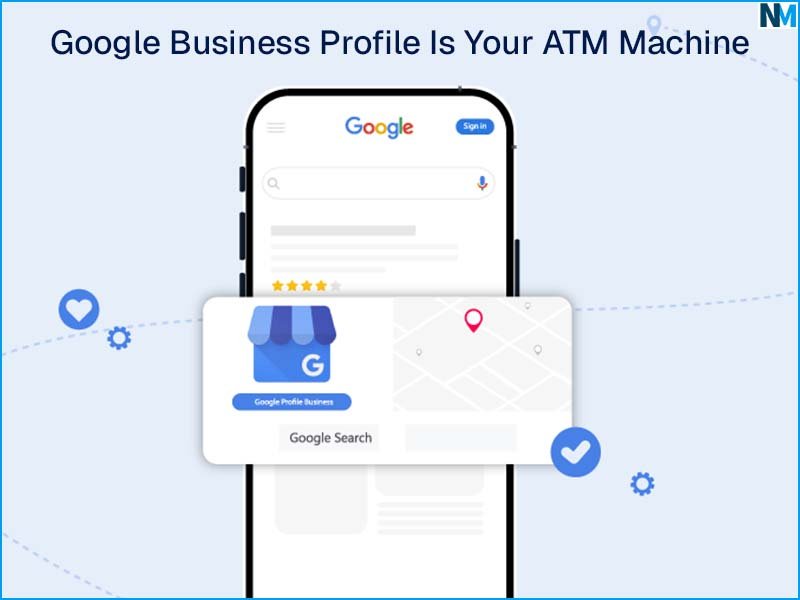
Step 3: Google Business Profile Is Your ATM Machine
Prior to the content.
Prior to backlinks.
Prior to anything.
Update your Google Business Profile.
because the Map Pack is where 60–70% of local purchasing decisions are made.
If you’re not among the top three…
You are not visible.
Here’s what I would do right away:
1. Optimize Categories
Your primary category needs to align with your primary revenue service.
Secondary categories support other services.
Avoid guessing.
Make a calculated decision.
2. Add Real Photos Weekly
Activity is rewarded by Google.
Upload:
- Group pictures
- Images from the job site and optimize images
- Before and after photos
- Outside of an office
Branded cars with stock photos undermine credibility.
3. Reviews Campaign (Aggressive But Ethical)
50 reviews in 90 days is the target.
How?
- SMS once the task is finished
- The invoice’s QR code
- Straightforward link
- Teach employees to inquire
Impact of reviews:
- Rankings
- Rate of click-through
- Conversions
Companies with more than 80 reviews do better than those with just 12.
It’s not difficult.
It’s consistency.
Step 4: Hyper-Local Content Wins Long-Term
Let’s dispel the myth that local businesses can’t succeed with blogs.
False.
Bad blogs are ineffective.
Google gives priority to hyper-local content because:
- Relevance
- Background
- Knowledge
- Geographical jurisdiction
If you work as a roofer in Houston, you should post:
- “The Best Roofing Materials for Texas Heat”
- “How Houston’s Humidity Damages Roof Shingles.”
- “What to Do in Houston Following Storm Damage”
- “What to Do After a Car Accident in Atlanta”
Is a must-read for Atlanta attorneys.
- “Explaining Georgia’s Personal Injury Laws”
- “How Long Does It Take to File an Injury Claim in Fulton County?”
Have you noticed anything?
These are particular.
They find solutions to issues.
They provide a location signal.
Topical authority is increased in this way.
Rankings are also influenced by topical authority.
Step 5: Win “Near Me” Without Keyword Stuffing
People search for “plumber near me.”
What “near” means is determined by Google.
So, how can you make yourself more visible?
You:
- Include a Google Map on webpages
- Maintain NAP uniformity everywhere.
- Naturally, bring up local zip codes.
- Include neighboring cities in the footer.
- If necessary, create distinct service area pages.
For instance, rather than saying: We serve Austin.
Say:
Serving the 78701–78759 (Austin) surrounding areas, including Round Rock, Cedar Park, Pflugerville, and Downtown Austin.
That strengthens the sense of closeness.
…which improves rankings.
Step 6: Backlinks — The Authority Multiplier
Most local firms make mistakes here.
They purchase inexpensive Fiverr links.
Authority isn’t developed that way.
Rather, I would concentrate on:
- Chamber of Commerce listings
- Supporting local events
- Mentions in the local newspaper
- Features of “Best of [City]”
- Collaborations with regional bloggers
- Excellent guest posting
- Edits in niches on guest websites
A robust local link is more powerful than fifty spam directories.
Real-world authority is valued by Google.
Construct that.
Step 7: Conversion Optimization (The Hidden Multiplier)

Traffic comes via SEO.
However, revenue is not the same as traffic.
Your website needs to transform.
What I would optimize is as follows:
- Buttons for click-to-call above the fold
- Mobile CTA that sticks
- Credibility badges
- Service assurances
- Options for financing
- Reviews that appear above the fold
- Quick loading time (less than three seconds)
Let’s say your website converts at 2%.
And you raise it to six percent.
Without boosting traffic, you just tripled your revenue.
That is the advantage.
Step 8: Track Everything (Or You’re Guessing)
Rankings are not the focus of local SEO.
It has to do with money.
I would arrange:
- Tracking numbers for calls
- Tracking of forms
- Google Analytics 4
- Monitoring with Google Tag Manager GBP Insights
Next, I would inquire,
- “Which page drives calls?”
- What is the most profitable keyword?
- Which city has the highest conversion rate?
Emotion is eliminated by data.
Emotion stifles development.
The Real 90-Day Breakdown
Days 1–14:
- Technical SEO audit
- Optimize GBP
- Build/optimize 3–5 money pages
- Install tracking
- Fix speed issues
Days 15–45:
- Publish 6–10 hyper-local blogs
- Launch review campaign
- Start local outreach
- Optimize on-page SEO
- Improve conversions
Days 45–90:
- Build 5–15 high-quality backlinks
- Expand service pages
- Monitor rankings weekly
- Improve top-performing pages
- Double down on winners
No shiny tactics.
Just structured execution.
Why Most Local Businesses Never Reach $100K
Because they:
- Want shortcuts
- Quit too early
- Avoid asking for reviews
- Ignore Google Business Profile
- Never publish content
- Don’t track results
- Treat SEO like a one-time task
SEO is compounding.
Next year is dominated by the company that gets started today.
The one that waits stays invisible.
The Brutal Truth
Your rivals aren’t more intelligent.
They don’t have greater talent.
They’re not lucky.
But because they are consistent.
In SEO, consistency is more important than skill.
Each and every time.
If You’re Serious About Scaling…
There are two choices available to you:
- Try to figure this out for yourself.
- Collaborate with those who perform this every day.
If you operate a local company and are sick of:
- Unstable leads
- Overspending on advertisements
- Seeing rivals rank higher than you
- Relying on recommendations
After that, it’s time to construct a functional system.
Want to Dominate Your Local Market?

At Uvisible, we help local businesses:
- Rank higher in Google Maps
- Build authority in their city
- Increase qualified traffic
- Generate consistent calls
- Scale toward $100K/month with SEO
No nonsense.
Avoid using spam techniques.
No hollow assurances.
Simply organized, data-driven local search engine optimization.
We’ll create the framework that will help you achieve success if you’re serious about it and not just “trying SEO.”
Schedule a strategy call right now with Uvisible.
Together, we can make your website your best salesman.
Because websites that make excuses don’t rank well.
Execution does.
And the companies that succeed do so.